Pine Processionary Control Services
Integrated Pest Management (IPm)
Pine Processionary Caterpillar (Thaumetopoea pityocampa)
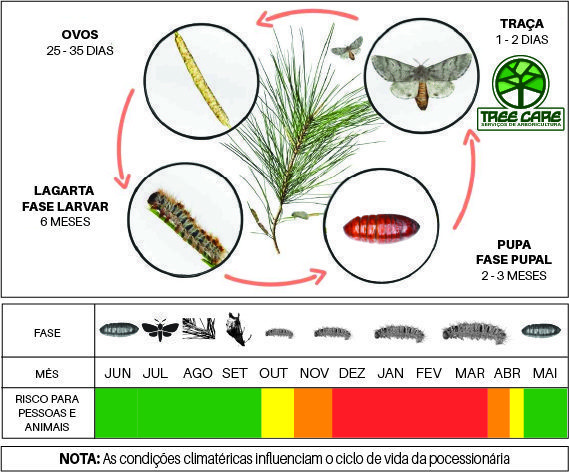
Life Cycle of the Pine Processionary Caterpillar
1. Egg Laying (Summer – July to September)
Adult moths emerge from the soil during summer, usually between July and September, at night. They have a very short lifespan (1 to 2 days), during which their sole purpose is to reproduce.
The female lays between 100 and 300 eggs in a spiral pattern on the needles of pine or cedar trees.
2. Hatching and Larval Development (Autumn – September to December)
Around 30 days later, the eggs hatch and the larvae (caterpillars) begin feeding on pine needles.
They go through five larval stages (instars) and build the characteristic silken nests at the tops of trees to shelter from the cold.
From the third instar onwards, they develop irritating hairs (setae) that are highly harmful to humans and animals.
3. Procession and Burial (Late Winter – January to March)
When they reach the fifth and final larval stage, the caterpillars descend from the treetops in a single-file line (hence the name “processionary”) and bury themselves 10–20 cm deep in the soil to begin pupation.
This is the period of highest risk of exposure to the toxic hairs, both from the caterpillars and the trails they leave behind.
4. Pupation (Spring – March to June)
Underground, the larvae enter the pupal stage, forming chrysalides in which they remain for several months.
In early summer, they emerge as adult moths and restart the cycle.
Interestingly, some pupae may remain dormant for more than a year, especially under adverse environmental conditions (a phenomenon called prolonged diapause).
When to act:
- Endotherapy: between September and December (before the caterpillars descend)
- Pheromone traps: in summer, to capture adult moths
- Nest destruction: in winter, with specific precautions
- Physical barriers: between January and March, to prevent the caterpillars from descending.
Recommended Methods
Pine Processionary Caterpillar Control
Endotherapy (September to December)
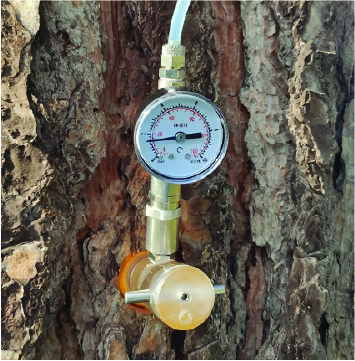
Endotherapy is a modern and effective method for protecting against the pine processionary caterpillar.
The treatment involves injecting a phytosanitary product directly into the tree trunk, ensuring internal protection without harming the environment, people, or animals.
It is a safe, eco-friendly, and highly efficient solution.
-
Objective: To prevent the caterpillars from feeding on the tree’s needles by killing them through ingestion.
How it works: A phytopharmaceutical product is injected into the tree’s vascular system, where it is distributed to the needles.
Advantages: No spraying required, safe for people and animals, and highly effective for several months.
Best time: September to December, before the caterpillars enter their most active and urticating stage.
Pheromone Traps (May to September)
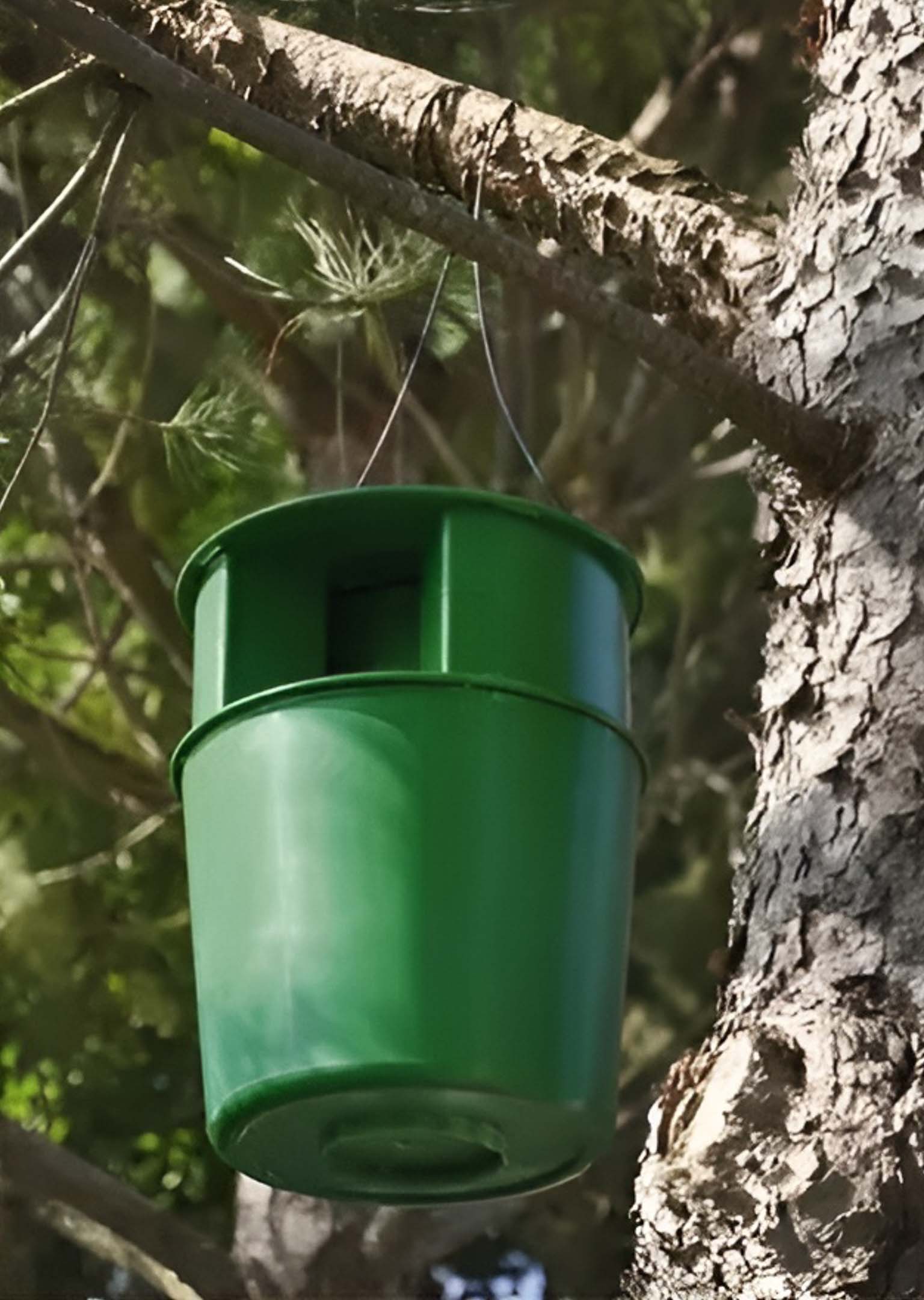
Pheromone traps are effective in controlling the pine processionary caterpillar by attracting and capturing male moths during the summer breeding season. This helps reduce the caterpillar population in the following season.
How Pheromone Traps Work:
- Pheromones are chemical substances produced by females to attract males for mating.
- The traps contain synthetic pheromones that mimic the scent of females, attracting the males.
- The males enter the trap and are captured, preventing them from mating with females.
Objective: To reduce the butterfly population by preventing females from laying eggs on pine trees.
Best time: Summer (usually between May and September), during the mating flight.
Note: This method does not eliminate the pest but significantly reduces population pressure in the following year.
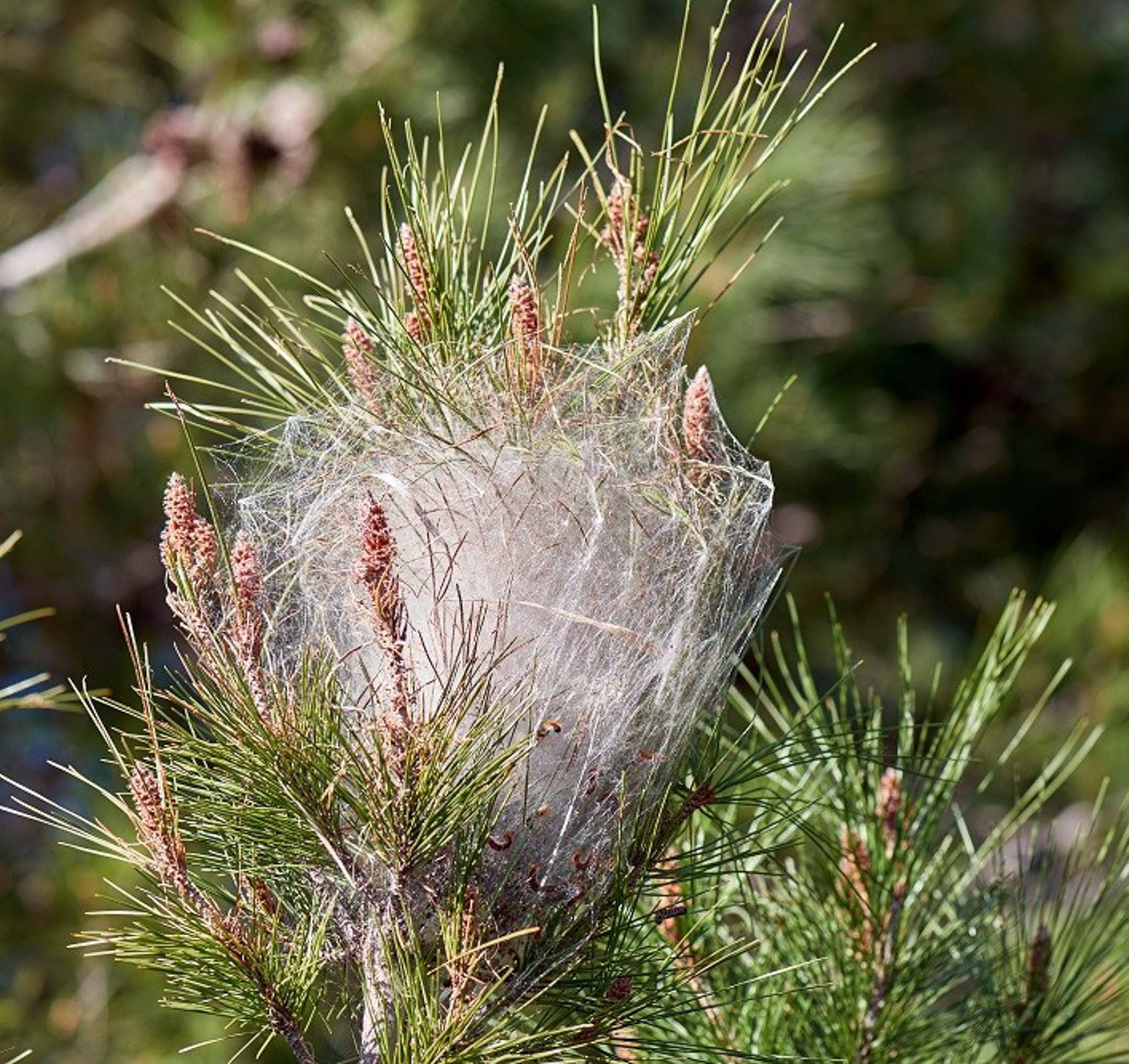
Nest Removal (December to March)
Removing the silk nests of the pine processionary caterpillar is an important corrective measure to reduce the active pest population, especially in areas where preventive treatment was not applied in time.
-
Objective: Directly eliminate groups of caterpillars sheltered in the nests.
How it works: Cutting and destruction of nests using appropriate tools, usually involving pruning at height or elevated platforms.
Precautions: Use Personal Protective Equipment (PPE) due to the presence of irritating hairs.
Best time: Winter to early spring, when nests are visible but caterpillars have not yet descended.
Physical Barriers on the Trunk (January to March)
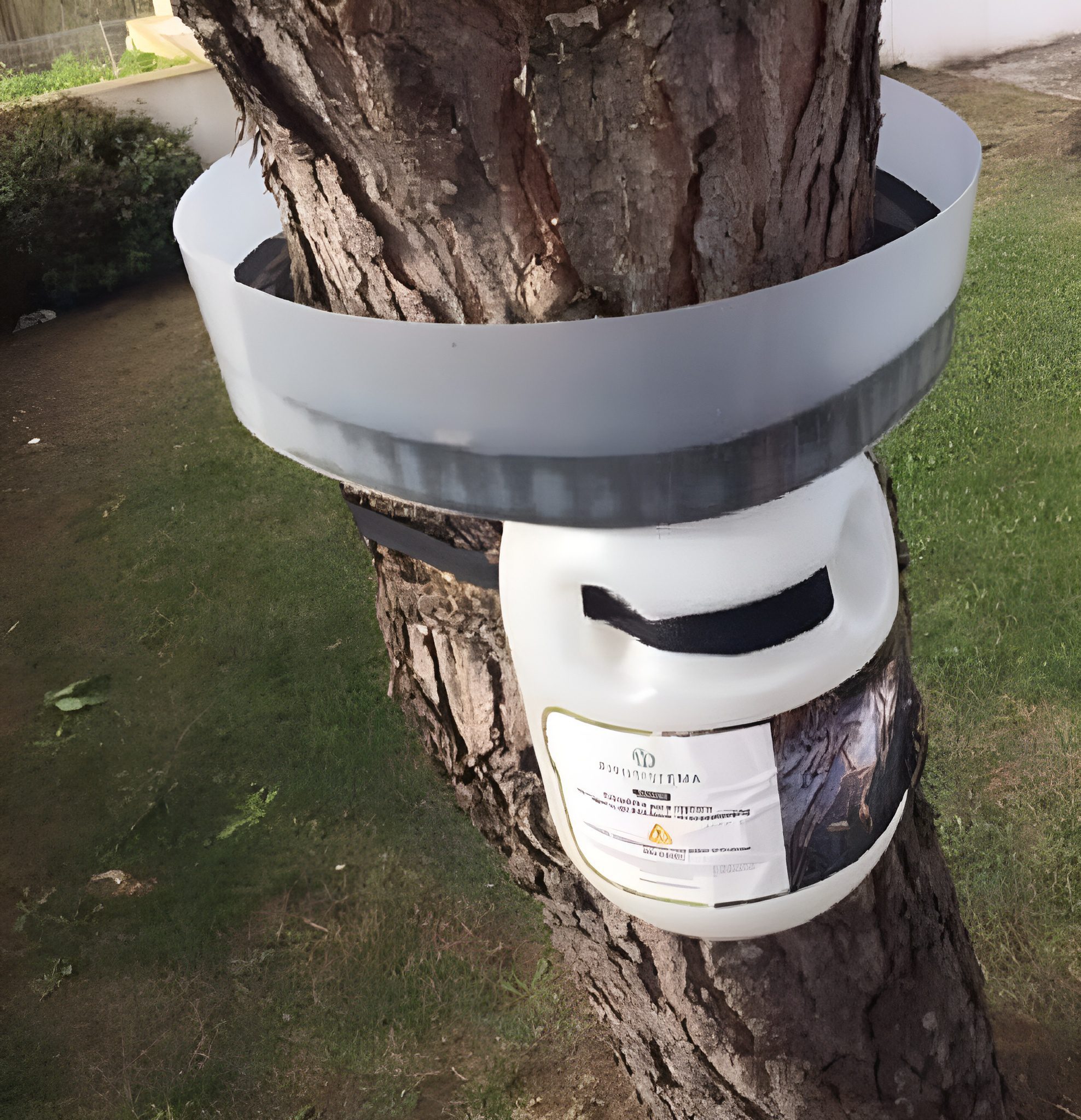
Physical barriers installed around the tree trunk are an effective method to prevent caterpillars from descending to the ground. This is a corrective measure especially useful in areas where preventive treatments were not applied in time.
Objective: Interrupt the biological cycle by preventing the caterpillars from completing metamorphosis.
How it works: A collection ring or physical barrier is installed around the trunk, capturing the caterpillars during their “procession” descent.
Advantages: An eco-friendly method, ideal as a complement to other treatments.
Best time: January to March, when the caterpillars descend from the canopy to bury themselves.